Pool Removal Contractors Serving Oakland, CA
Remove your unused pool and reclaim your backyard. Full-service from permits to cleanup throughout Oakland and nearby communities.
Oakland Pool Removal
Pool Removal Contractors Serving Oakland, CA
An unused pool can take up valuable space and require ongoing maintenance. Our Oakland pool removal team — 500+ projects strong — handles the entire process so you don't have to.
What's your ZIP code?
Why Oakland Homeowners Are Removing Their Pools
Oakland's residential neighborhoods span from the flatlands near the bay to the Oakland Hills, where properties range from historic bungalows to mid-century homes — many with pools built between the 1920s and 1970s that are now well past their expected service life. Hillside properties in particular often face access challenges that affect how a removal project is scoped and priced, which is why an on-site assessment matters more here than anywhere else. That said, you can get a reasonable ballpark in about 30 seconds using our calculator — a useful starting point before you decide whether to move forward.
More Usable Space for Your Oakland Home
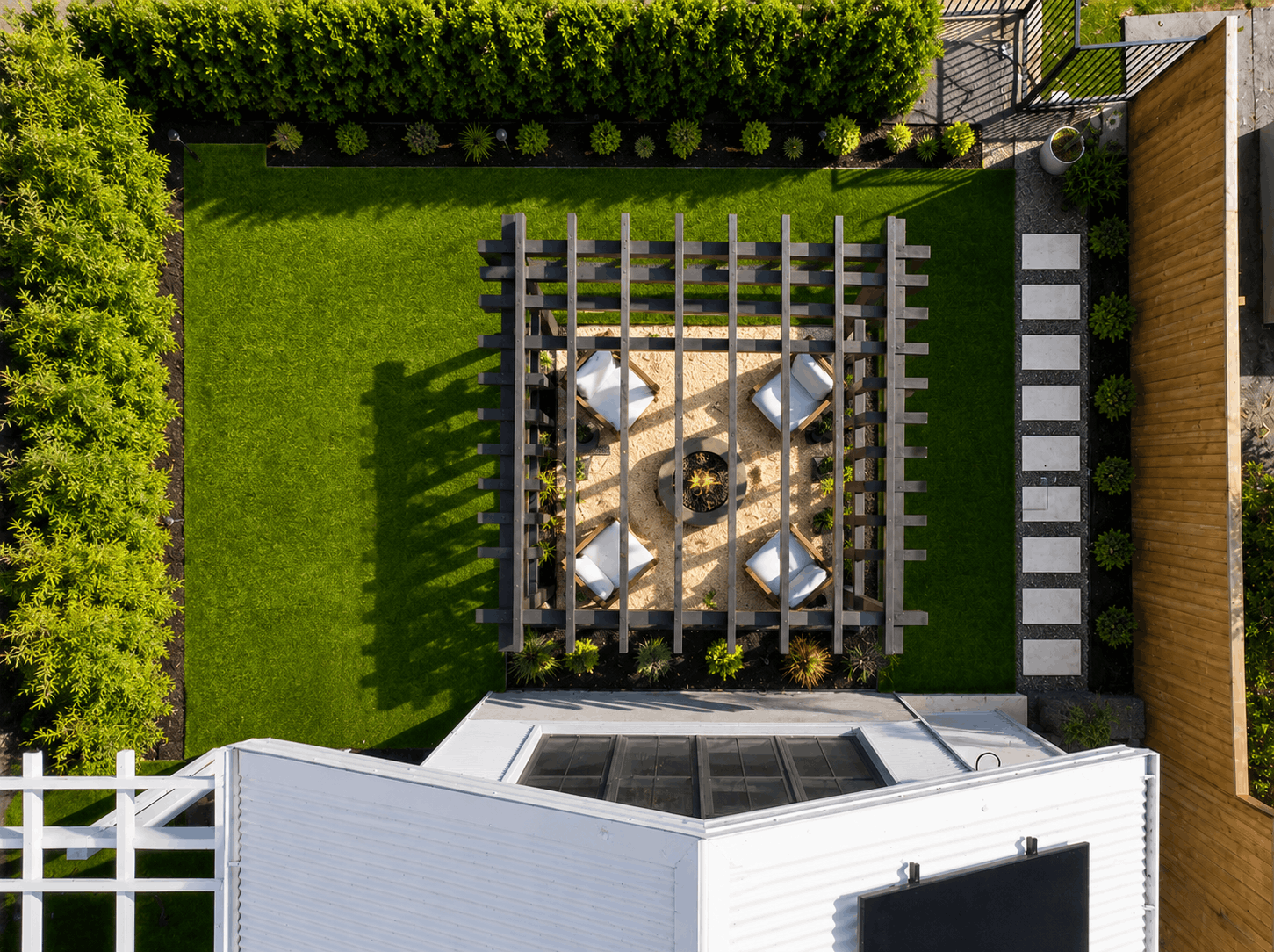
Whether you are in a historic Rockridge bungalow, a mid-century Montclair home, or a hillside property in the Oakland Hills, removing an unused pool returns usable space to your yard. Oakland homeowners are replacing aging pools with outdoor kitchens, drought-tolerant gardens, play areas, and expanded patios that get used year-round.
Stop the Oakland Pool Repair Cycle
Oakland’s housing stock spans from the 1920s through the 1970s, and a significant number of properties in neighborhoods like the Oakland Hills, Rockridge, and Montclair still have their original pools. These pools are well past their expected service life. Cracked shells, failing plumbing, and outdated equipment can trigger a repair cycle that quickly exceeds the cost of removal. Homeowners in Berkeley, Alameda, and Piedmont face the same calculation.
Cut Costs on Your Unused Oakland Pool
Between Alameda County water rates, electricity for the pump, chemicals, and regular cleaning, a pool that sits unused still costs hundreds every month. In Oakland, where busy schedules often keep pools idle, those recurring expenses add up fast. Once the pool is gone, those costs stop immediately.
Oakland ADU-Ready Pool Removal
ADU development is increasingly popular in Oakland and Berkeley, and a backyard pool is one of the most common obstacles between a homeowner and a permitted accessory dwelling unit. An engineered full removal provides the compaction testing and documentation the City of Oakland Building Department typically requires before issuing construction permits over or near a former pool area. For Berkeley, Alameda, Emeryville, and Piedmont, different jurisdictions apply, and we handle the correct process for each property.
An Oakland Backyard Designed Around You
Many Oakland homes were designed around the pool as the centerpiece of the backyard — a layout that made sense in the mid-century era but often feels limiting today. With 300 days of sunshine a year, a flexible outdoor space designed for dining, relaxing, gardening, or entertaining delivers far more daily value than a pool that sits under a cover for most of the year. Removal gives you a blank canvas.
Peace of Mind for Oakland Families
Even a fenced and covered pool requires ongoing vigilance. For Oakland families with young children, grandchildren, or pets in neighborhoods from the flatlands to the Oakland Hills, an unused pool represents a low-grade worry that never fully goes away. Removal eliminates the risk entirely and makes the backyard a space everyone can enjoy without concern.
Comparing Your Options
Pool Removal Services in Oakland
Three removal methods, each designed for different goals. We will help you determine the right approach during your free site assessment.
Partial Pool Removal
Oakland’s Lowest-Cost Choice
The most affordable option. We remove the top two feet of pool coping, drill drainage holes into the bottom, and backfill the cavity. For Oakland homeowners on hillside lots where heavy equipment access is limited — common in the Oakland Hills and Berkeley Hills — partial removal can also simplify logistics since less debris needs to be hauled out.
Best for:
- Homeowners seeking the lowest-cost option
- Landscaping projects
- Lawn and garden areas
The backfilled area is intended for landscaping purposes only and is not designed to support structures.
Full Pool Removal
Complete Oakland Demolition
The entire pool shell, concrete, rebar, and debris are removed and hauled off-site. This is a common choice on larger flatland and Piedmont properties where full equipment access is available and homeowners want no buried structure remaining. The backfilled area is suitable for landscaping without engineering oversight.
Best for:
- Homeowners who want the entire pool removed
- Future landscaping projects
- Properties where local requirements prohibit partial removal
Unless compaction testing and engineering oversight are performed, the backfilled area is intended for landscaping purposes only and is not designed to support structures.
Engineered Full Pool Removal
Oakland’s ADU-Ready Option
Complete removal with soils engineering oversight, compaction testing in 6-inch to 12-inch lifts, and documentation. Given the growing ADU interest across Oakland and Berkeley, this is a frequently requested option. The City of Oakland Building Department typically requires this level of documentation before issuing construction permits for ADUs, garages, or home additions over or near a former pool site.
Best for:
- ADUs — increasingly popular in Oakland and Berkeley
- Home additions
- Garages
- Workshops
- Future construction projects
- Buildable lot requirements
With soils engineering oversight, compaction testing, and documentation, this option may support future structures, subject to local requirements and approvals.
Not Sure Which Option You Need?
We’ll evaluate your pool, site access, future plans, and local requirements during a free site assessment. Our team will explain your options and recommend the removal method that best fits your goals and budget.
Understanding Costs
How Much Does Pool Removal Cost in Oakland?
Every pool removal project is unique. These are the key factors that influence the final cost of your project.
Your Oakland Pool’s Size
Larger pools require more demolition, debris hauling, backfill material, and labor. Pools in Oakland vary widely — from compact historic bungalow pools in Rockridge to larger pools on hillside and Piedmont estate properties.
Oakland Pool Depth Considerations
Deeper pools require additional excavation, backfill material, and labor compared to shallower pools. Many of Oakland’s older pools, built from the 1920s through the 1970s, were designed with deeper diving ends than typical modern pools — which increases the volume of backfill material needed.
Access Conditions in Oakland
Narrow side yards, retaining walls, steep driveways, or limited equipment clearance can affect logistics. This is particularly relevant in the Oakland Hills and Berkeley Hills, where sloped lots, mature trees, and winding streets may require specialized equipment or additional coordination.
Choosing Your Removal Method in Oakland
Partial removal is the most affordable. Full removal costs more due to additional demolition and hauling. Engineered full removal includes soils engineering oversight, compaction testing, and documentation — an additional investment that is often required for ADU construction in Oakland and Berkeley.
City of Oakland Permit Requirements
Permit fees are set by the City of Oakland Building Department and vary by project scope. We handle all permit applications for you and will explain the expected costs during your free site assessment. Berkeley, Alameda, Emeryville, and Piedmont each have their own building departments with different fee schedules. Properties in unincorporated Alameda County follow a different fee schedule.
Engineering & Documentation for Oakland
If you plan to build an ADU or other structure on the former pool site, the City of Oakland will typically require compaction testing and a soils engineer’s report. This documentation adds cost but is essential for obtaining your building permit. We coordinate directly with your engineer to keep the process moving.
Important:
This is an approximate estimate and does not include permit fees, which vary depending on whether your property is located within a city jurisdiction or an unincorporated county area. For an accurate, no-obligation written estimate, we're happy to schedule a free site visit.
Use our calculator above to receive a personalized estimate in 30 seconds.
Communities We Serve
Serving Oakland and Nearby Communities
Select a community below to learn more about pool removal services in your area.
Oakland is the third-largest city in the Bay Area, with neighborhoods ranging from the Oakland Hills to the vibrant flatlands. Oakland Hills homes in particular feature a high concentration of in-ground pools built from the 1920s through the 1970s, with many now at or beyond their expected lifespan. Pool removal permits are issued through the local building department, and we handle the full permit process. Oakland's diverse housing stock means pool removal needs vary widely — from historic Rockridge and Montclair homes to mid-century properties in the hills.
Berkeley features a wide range of residential architecture, with many homes in the Berkeley Hills including pools that were installed decades ago. Older Berkeley pools often have unique configurations due to hillside lots and limited access. Permits are issued through the local building department. Berkeley homeowners frequently explore pool removal as part of seismic upgrades, ADU projects, or complete property transformations.
Alameda is an island city with a distinct architectural character, featuring many well-preserved Victorian and Craftsman homes along with mid-century neighborhoods. Pools in Alameda tend to be older and are now reaching the end of their service life. Permits are processed through the local building department.
Emeryville has transformed from an industrial center to a mixed-use city with residential neighborhoods. While fewer Emeryville homes have pools compared to neighboring communities, those that do tend to be older. Permits are issued through the local building department.
Piedmont is a small, affluent city surrounded by Oakland, known for its distinctive homes and well-maintained properties. Many Piedmont estates feature historic pools that are now aging. Piedmont homeowners often weigh pool removal against renovation, and engineered removal is common for those planning ADUs or home additions. Permits are issued through the local building department.
Permits
We Handle the Permit Process for You
Permit requirements vary between cities and counties. Rather than navigate it alone, our team manages the entire process from start to finish.
Your Oakland Jurisdiction, Identified
During your free site assessment, we determine whether your property falls under the City of Oakland, Berkeley, Alameda, Emeryville, Piedmont, or unincorporated Alameda County jurisdiction — each has its own building department with different requirements.
Oakland Permit Requirements, Explained
We walk you through exactly what your local building department requires. Oakland, Berkeley, Alameda, Emeryville, and Piedmont each administer their own permit processes, and we know the differences — so you do not have to figure it out yourself.
Your Oakland Application, Prepared & Submitted
We handle all paperwork and submit the permit application to the correct department — whether that is the City of Oakland, Berkeley, Alameda, Emeryville, Piedmont, or Alameda County — on your behalf.
Tracking Your Oakland Permit Through Approval
We monitor your application status with the relevant building department and keep you updated until the permit is issued. No chasing down city offices or checking portals on your own.
Permit fees vary by city and county and are not included in the preliminary estimate provided by our calculator. During your free site assessment, we'll review the permit requirements for your property and explain any expected permit costs before work begins.
Simple Process
How Pool Removal Works
Six steps from your first call to a clean, graded yard ready for your next project.
Free Site Assessment
We visit your property, evaluate access, pool type, depth, and surrounding conditions. You get a firm written estimate with no obligation.
Permits & Scheduling
We pull all necessary demolition permits and coordinate utility disconnects. You pick a start date that works for your schedule.
Draining & Demolition
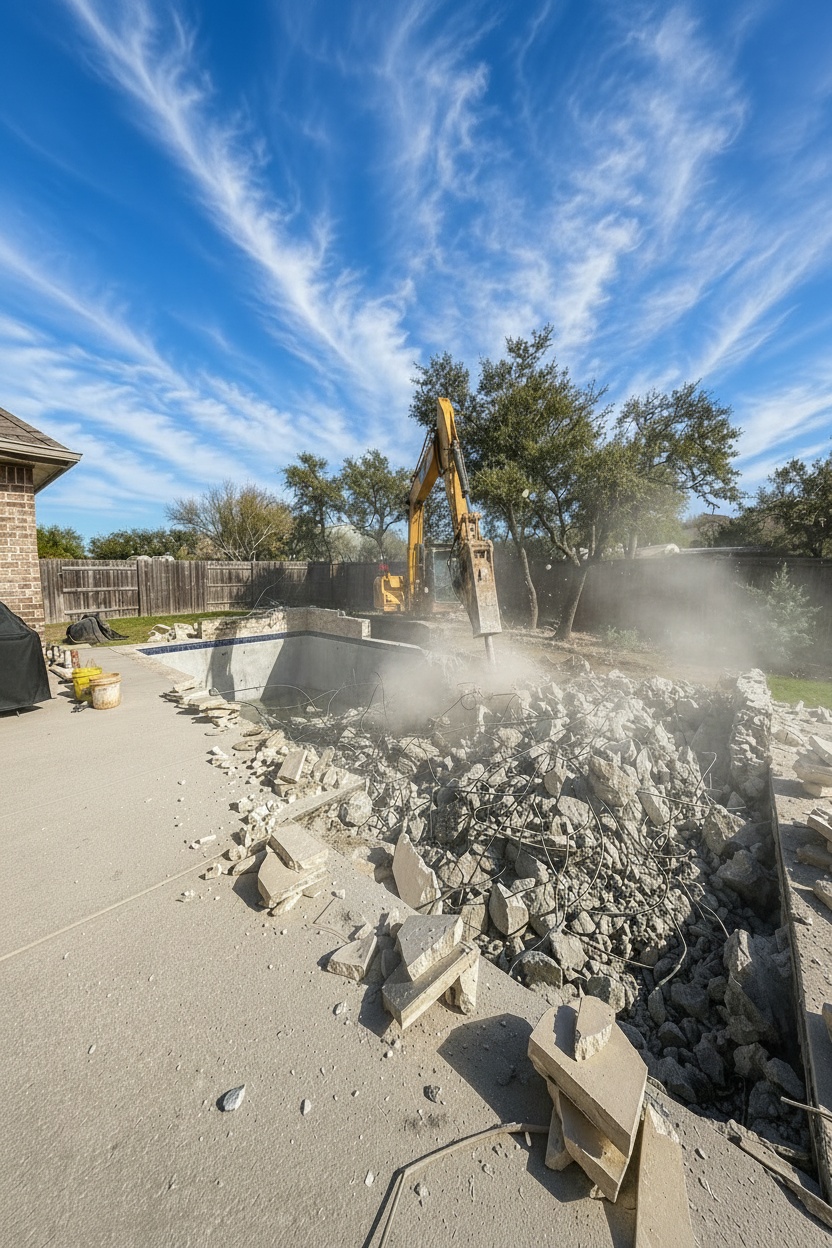
We drain the pool and break up the shell, removing everything per the agreed method — engineered or non-engineered — with all debris loaded for haul-off.
Debris Hauling
All concrete, rebar and debris are loaded and hauled away if we are doing a full removal. We leave the site clean and ready for the next phase.
Backfill & Compaction
We backfill in 6″–12″ lifts with the soil, wetting down each lift. Every layer is compacted using specialized equipment before the next is added. For engineered pool removals, a soils engineer performs periodic inspections and compaction testing. Upon completion, the engineer issues a compaction report presented to the local building official at the final inspection.
Final Walkthrough
We walk the site together, confirm everything meets your expectations, and provide your permit, inspection card, and final compaction report with testing results, when applicable.
FAQ
Common Pool Removal Questions
Pool removal costs in Oakland depend on your pool's size and depth, site access conditions (hillside lots can add complexity), the removal method you choose, and City of Oakland permit requirements. Partial removals are the most affordable option. Full and engineered full removals involve more scope. Use our calculator for a starting estimate, then schedule a free on-site assessment.
Yes. Pool removal in Oakland requires a permit through the local building department. Berkeley, Alameda, Emeryville, and Piedmont each have their own building departments. We handle all permit applications and determine the correct process for your property during the site assessment.
Oakland’s mix of flatland and hillside properties means the right removal method depends heavily on your specific lot conditions and long-term plans. Partial removal removes the upper portion of the pool while leaving most of the shell in place. Drainage holes are created and the area is backfilled — suitable for landscaping only. Full removal takes out the entire pool structure and hauls it away, leaving no buried structure. Engineered full removal adds soils engineering oversight, compaction testing, and documentation. When the removal follows the soils engineer’s recommendations and a compaction report is completed and approved, the backfilled area may support a new structure — subject to your local Building Department’s requirements.
In most cases, an engineered full removal is required before a building permit will be issued for construction over or near the former pool area. ADUs are increasingly popular in Oakland and Berkeley. Our engineered full removal includes the compaction testing and documentation required for Alameda County and City of Oakland building permits.
Most pool removal projects in Oakland complete in 3 to 5 days of active work once permits are issued. Permit timelines vary by jurisdiction — we will give you a realistic estimate during the site assessment. Hillside properties with limited access may require additional time. We keep you updated on progress throughout the project.
No. Preliminary estimates from our calculator and site assessment do not include permit fees. Permit fees are set by each city and vary by jurisdiction and project scope. We'll explain expected permit costs during your free on-site assessment.
Ready to Reclaim Your Backyard?
Get a free pool removal estimate for your Oakland property. We will evaluate your pool, site access, future plans, and local requirements before providing a written quote.